Connect with support groups and sources for information
Being diagnosed with ATTR amyloidosis can be hard to process and can come with a lot of questions. With support and the resources available, you can work to manage this condition.
The following groups and foundations can help you and your loved ones learn more about living with ATTR:
Amyloidosis Alliance
Global Genes
Global Heart Hub
Mended Hearts Europe
oneAMYLOIDOSISvoice
World Heart Federation
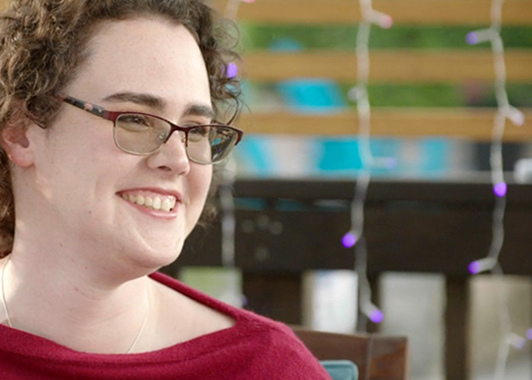
Hannah's journey: Turning an hATTR diagnosis into hope
For generations, Hannah's family faced the symptoms of hATTR without answers. Now, with an early diagnosis, she's redefining what's possible.
Hannah: Well, it all began when my aunt stumbled upon a letter that my grandmother's doctor wrote describing her symptoms. The symptoms of nausea, neuropathy, and body fatigue. We believed that it was a brain tumor and old age that took her. Through my experience, we realized that this may not have been the case.
Growing up, I enjoyed swimming. And I played on the traveling basketball team. In seventh grade I began having a severe headache, and I got very disoriented. I was taken to the closest emergency room, and I was consulted with a neurologist. I was tested for numerous neurological conditions. They could not find anything. We felt that there was something going on, but that nobody could figure me out. As I got older, my symptoms got worse.
I no longer had the strength to do activities I once did. I woke up many nights in severe body pain. It was challenging to walk. I missed a lot of events growing up. And I had to put my education on hold. I could no longer keep up. It was not just me. My mother and my uncle were experiencing the same symptoms. My uncle was the family favorite.
When his health started to deteriorate, they scheduled an appointment and was able to get answers and my uncle received his genetic test that confirmed he had hATTR amyloidosis. The doctor informed him it was hereditary and advised that all family members be tested for this gene. From that day on, I began the process with my doctor. I finally received my diagnosis at 29. Through genetic testing I found out that I had the T60A variant in the TTR gene. When I received the diagnosis, I wanted to hug my doctor and tell her thank you. My family and I had answers.
My doctor presented a treatment option, and she informed us that I walked into her doors at a perfect time because before that there wasn't any options available—options that some of my loved ones missed out on. Since working with my doctor, we have created a wonderful team. I don't have 100 percent energy back. I still have fatigue. I still have weakness. I still have neuropathy, but my symptoms are better than what they were. Early diagnosis is very important. I feel the earlier you can catch something the better off your body and health can be. My hopes for the future are that I will be able to finish my education and travel to Europe. It is amazing to see the growth of hATTR amyloidosis education just in the last 10 years. It makes me feel elated, it makes me wish that I could go and report this to my loved ones who missed out.
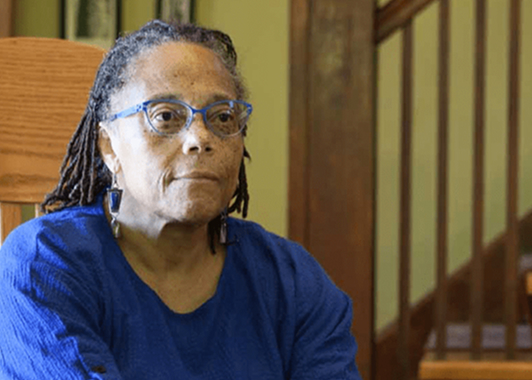
CeCe's story: Finding answers
After years of misdiagnosis, CeCe uncovered the cause of her symptoms—hATTR. Her persistence led to answers and a path forward.
CeCe: My life before hATTR amyloidosis was really full. I was working as a nurse practitioner. I felt like I was really making a difference. My husband and my children were doing amazingly well. And I felt like I was becoming the person that I always wanted to be. My initial symptoms was severe carpal tunnel syndrome. I would wake up in the middle of the night with my hands and arms burning with extreme pain. When the initial symptoms hit, we were really afraid. I realized that my symptoms of hereditary amyloidosis had become too much to handle. I was experiencing severe shortness of breath, I couldn't walk half a block, my ankles were swelling.
I went to see my primary care doctor about the carpal tunnel syndrome I was experiencing. From there, I saw multiple specialists. Between 2005 and 2011 I saw a neurologist, a pulmonologist, a cardiologist, a gastroenterologist, and finally, a rheumatologist. I received multiple misdiagnoses. We immediately realized, my family and I, that having a diagnosis meant that we could develop a plan and work together as a team to help me get well. Medical knowledge as a nurse practitioner kept me going forward. When I was diagnosed, I left graduate school, I resigned from my job, and even though I had to give up things that I loved, I knew it was necessary in order for me to get well.
I'm doing well managing my amyloidosis and my daily activities. I had a heart transplant. I am in regular contact with professionals at the Amyloid Clinic, and there are providers there who are familiar with hATTR amyloidosis. I hope that others learn that there are lots of red flag symptoms with hereditary amyloidosis. It's easy to get a misdiagnosis. Make sure you tell your doctor about all of the symptoms that you're having. I also want you to be brave, be tenacious. And, by all means, never, never give up.
Sophia's Story, UK
Tsuyoshi’s Story, Japan